- Trekking in Nepal
- Paragliding in Nepal
- Peak Climbing in Nepal
- Flight Reservation in Nepal
- Trekking Peak climbing in Nepal
- Bunjee Jumping in Nepal
- High Pass (ADVENTURE) Trek
- Hostel Accommodatin
- Hotel Accommodation in Nepal
- Jungle Safari in Nepal
- Mountain Bike in Nepal
- Travel / Tour in Nepal
- Vehicle Hire Service
Trekking in Nepal : Annapurna Sanctuary & Chitwan National Park
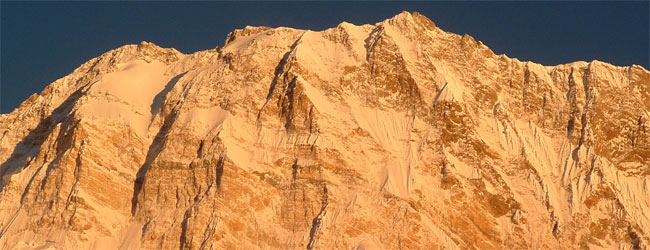 Annapurna Base Camp trekking known as Annapurna Sanctuary Trekking. This is famous region for trekkers. Annapurna I 8091 meter, II, III, IV, Annapurna south 7219 meter, Machha Puchhre (Fish Tail) 6997 meter, Mt. Dhaulagiri 8167 meter, Gangapurna are main
| Duration - 14 | Max Altitude: 4100m |
| Trek Name: Annapurna Sanctuary & Chitwan National Park Trek Code: Anp 04 |
Max Group Size: No Limits |
| Cost: Depends on Number | |
Annapurna Base Camp trekking known as Annapurna Sanctuary Trekking. This is famous region for trekkers. Annapurna I 8091 meter, II, III, IV, Annapurna south 7219 meter, Machha Puchhre (Fish Tail) 6997 meter, Mt. Dhaulagiri 8167 meter, Gangapurna are main attraction of this region. This course from Pokhara to the Modi Khola and on to Annapurna glacial sanctuary allows an intimate look at Annapurna Mountain. It is passes through dense stands of rhododendron and bamboo. The pleasers of trekking are compounded by the contrasts observable in agriculture and Gurung, Magar Culture and ethnology. Life style. From Kathmandu trekkers can fly to Pokhara or drive by overland transport. There are a teahouse/ hotels are available in the region.
Gorepani, Chhumrung, Dhampus gives us good panoramic views of the mountain and local farming Committee. Descending to Nayapool, Our Overland transport would have been waiting to receive you to Pokhara. Tomorrow, we meet for Rafting Program in Trisuli River by Overland Transport. From there exciting rafting begins and floats down to a picnic spot for lunch along the river side. Continue your destination where our vehicle will be waiting to transfer you to Chitwan.
The Chitwan National Park (CNP) is a world heritage property, and it also contains a Ramsar Site – Beeshazari Tal in its buffer zone. The CNP has a history of over 3 decades in park management and a rich experience in resolving conflicts between the park and the people.
It is a rich natural area in the Terai, the subtropical southern part of Nepal. A total of 68 species of mammals, 544 species of birds, 56 species of herpetofauna and 126 species of fish have been recorded in the park. The park is especially renowned for its protection of One Horned Rhinoceros, Royal Bengal Tiger and Gharial Crocodile.
Chitwan National Park is situated in south central Nepal in the sub tropical lowlands of the inner terai of Chitwan, Makawanpur, Parsa and Nawalparasi districts. It lies between 27°16.56’- 27°42.14’ Latitudes and 83°50.23’-84°46.25’ Longitudes. The altitude ranges from 110m to 850m above sea level. The park is bounded by the Rapti and Narayani River in the north, Parsa Wildlife Reserve in the east and Madi settlements and India border in the south. The physiography of the park consists of the Terai and Siwaliks. Three major rivers Narayani, Rapti and Reu, and their floodplains; and several lakes and pools are the major water sources of the park.
Being the first protected area of Nepal, it has a long history of over three decades in park management and rich experiences in nature conservation. Chitwan was a big game area for the royal families, Rana rulers and their guests. The area comprising the Tikauli forest from Rapti River to the foothills of the Mahabharat extending over an area of 175 km2 was declared as Mahendra Deer Park in 1959. The area south of the Rapti River was demarcated as a Rhino Sanctuary in 1963. It was proclaimed as Royal Chitwan National Park with an area of 932 km2 in 1973. After the peoples’ revolution in 2006, the park’s name was changed to Chitwan National Park.
In recognition of its unique biological resources of outstanding universal value, UNESCO designated CNP as a World Heritage Site in 1984. In 1996, an area of 750 km2 surrounding the park was declared a buffer zone, which consists of forests and private lands including cultivated lands. The buffer zone contains a Ramsar Site – Beeshazari Lakes.
The park has a range of climatic seasons each offering unique experience. October through February with average temperature of 25C offers an enjoyable climate. From March to June temperatures can reach as high as 43*C. The hot humid days give way to the monsoon season that typically lasts from late June until September when rivers become flooded and most of the roads are virtually impassable. Mean annual rainfall of the park has been recorded 2150mm.
In late January, local villagers are allowed to cut thatch grasses to meet their needs, which offer a better viewing of wildlife to visitors. Also, between September and November, and February and April, migratory birds join the residential birds and create spectacular bird watching opportunities. While the monsoon rains bring lush vegetation, most trees flower in late winter. The palash tree, known as the "flame of the forest", and silk cotton tree have spectacular crimson flowers that can be seen from a distance.
| Itinerary: | |
DAY 01: Arrival in Kathmandu (1300m/4264ft) (Note: You can fly Kathmandu and trek to Chhumrong same day, in this case you save one day) DAY 03: Drive Pokhara to Ghandruk Trek to Chhomrong (2170m/7120ft): 5 hours (Note: you can fly Bharatpur to Kathmandu to save time) Day 14: Leave Kathamndu to your destination
|
|
| Trips Start Dates: | |
| Jan, Feb, Mar, April, May, Jun July, Aug, Sept, Oct, Nov, Dec. |
|
| Price from Kathmandu (US dollars): | |
| US$ 660/ each 3 pax in group, US$ 705/ 2 pax in group, US$ 830/ for single trekker. | |
| Included in your trip: | |
|
|
| Not included: | |
|
|
| Book Trip Now | |