enjoy the beauty of nepal with us!!
  • Home
  • NEPAL
  • TIBET
  • BHUTAN
  • ACCESSORIES
  • ABOUT US
  • FEEDBACK
  • CONTACT US

NEPAL

  • Trekking in Nepal
  • Paragliding in Nepal
  • Peak Climbing in Nepal
  • Flight Reservation in Nepal
  • Trekking Peak climbing in Nepal
  • Bunjee Jumping in Nepal
  • High Pass (ADVENTURE) Trek
  • Hostel Accommodatin
  • Hotel Accommodation in Nepal
  • Jungle Safari in Nepal
  • Mountain Bike in Nepal
  • Travel / Tour in Nepal
  • Vehicle Hire Service

TIBET

  • Expedition in Tibet
  • Tour in Tibet
  • Trekking in Tibet

BHUTAN

  • Tour and Trekking in Bhutan

ACCESSORIES

  • Check List for Trips
  • Mountaineering information
  • Trekking Permit fee structure
  • FAQ

Trekking in Nepal : Tengboche Trek


Duration - 11 Max Altitude: 3867 meter
Trek Name: Tengboche Trek
Trek Code:
Max Group Size: 1- 15 person
Cost: . As per group size
 

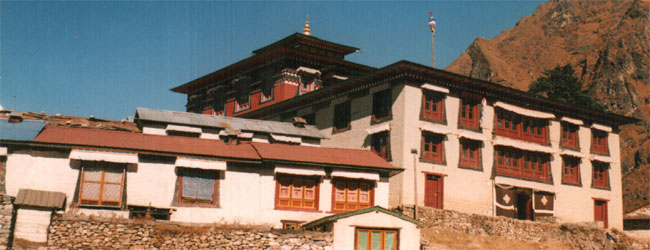
By Tengboche Monastry

Tengboche is an important Buddhist monastery in the mountains of the Himalayan Kingdom of Nepal. It is in the Khumbu region of northeast Nepal, the home of the Sherpas. Tengboche is famous because of its spectacular and unique location. It lies on the main route to the Base Camp of Mount Everest and offers the first clear views of the highest mountain in the world. Tengboche became known to the world after Sir Edmund Hillary and Tenzin Norgay Sherpa made the first ascent of Mount Everest in 1953. A lot has changed since those days when Tengboche was remote and inaccessible. Today over 30,000 people come ever year to enjoy the beauty of Tengboche and splendor of the mountains.

Tengboche monastery is an important part of Nepal's heritage. Mt. Everest [8,848m] which is known as Sagarmatha in Nepali [Chomolungma in Tibetan] gives its name to the National Park in which Tengboche is located. The Sagarmatha National Park extends over 1148 sq. km and is recognized as a UNESCO World Heritage Site of "outstanding universal value". Most visitors walk to Tengboche by way of Namche Bazaar. The trek takes 14 days from Jiri or 3 days from the airstrip at Lukla. Tengboche lies on a ridge at an altitude of 3,867 meters [12,700 feet]. From Tengboche there are spectacular views of some of the world's highest mountains including Ama Dablam [6,812m], Nuptse [7,855m] Lhotse [8,516m], Tamserku [6,623m] and Kantega [6,779m] as well as the many others that form one of the most impressive range of Snow Mountains anywhere. The ice walls of these mountains dominate the landscape and avalanches can frequently be heard rumbling high up the glaciers.

It is against Buddhist belief to kill anything and because of this tradition of peace and compassion, Tengboche is a refuge for wildlife. In the quiet of the ancient forests surrounding Tengboche, the national bird of Nepal, the iridescent Dhaphe [Impeyan pheasant] can frequently be seen. Huge vultures dominate the skies above. Yellow billed choughs and black ravens play on the winds. These wild high places are also inhabited by the tahr and goral, both rare species of wild goat-antelope, as well as the endangered musk deer. In addition there are many rare kinds of medicinal plants and sweet smelling incense scrubs. Tall rhododendron forest of many different species and colors adorn the landscape in spring. Rocks are carved with prayers and bright flags hung in high places carry prayers of compassion skywards.

The Tengboche monastery was established in its present site by Lama Gulu in 1916 and has strong ties with the Rongbuk monastery in Tibet. Although there are older village monasteries in the area Tengboche was the first celibate monastery and follows the Nyingmapa lineage of the Vajrayana Buddhist teachings.

Tengboche has been destroyed and rebuilt twice. In 1934 an earthquake caused servere damage and on the 19th January 1989 the monastery burnt to the ground. The fire was so intense that nothing of worth could be recovered. Most of the monastery's precious old scriptures, statues, murals and woodcarvings were lost. Even the famous stone in which Lama Sangwa Dorje left a foot print cracked in the tremendous heat.

Today Tengboche Monastery stands again rebuilt by local craftsmen, the monks and Sherpa community with help from the Sir Hillary and the Himalayan Trust, the American Himalayan Heritage Foundation and many international well-wishers. Only the upper rooms remain unfinished. This huge project depleted the monastery's financial resources. In the effort to rebuild the monastery everything else had to be left. It is only in the last few years that Tengboche has been able to look to the surrounding environment and the impact that tourism is having on this once remote and peaceful place.

In September 1993, the consecration and inauguration ceremony of the rebuilt monastery was performed by His Holiness Trulshik Rinpoche and attended by the Prime Minister, Ministers, Ambassadors, Sir Edmund Hillary and hundreds of other distinguished guests and community leaders. On this occasion the Abbot of the monastery, known as Tengboche Rinpoche, requested help in managing the huge influx of tourists to Tengboche and the environmental problems ensuing, in particular the lack of a clean, reliable water supply.

In response to this request and in close collaboration with the Abbot, Mr. Michael Schmitz [M.Sc.Econ.,M.A.Arch.,Dip.Dev.Planner] undertook the research, writing and implementation of a development plan to alleviate the most critical problems affecting the Tengboche environment.

This web page is part of that project and it is hoped that it will inspire others to undertake similar preservation and protection projects so that the world's rich Heritage can be enjoyed by our future generations. For as to quote The Dalai Lama

"As the world grows smaller and smaller, more interdependent, today more so than ever before life must be characterized by a sense of universal responsibility, not only nation to nation and human to human but also human to other forms of life."

It is hoped the activities of the Tengboche Development Project may contribute to this.


Itinerary:

Day 01: Arrive in Kathmandu
We will be waiting you at the airport and accompany you to the Hotel. There will be time to rest and take in this vibrant city's energy, before a welcome dinner at a traditional Nepalese Restaurant O/N in Hotel


Day 02: Kathmandu:sightseeing by trekkers and trek preparation staff
The day will start with a guided tour of Kathmandu's historical and spiritual attractions; including the historic Durbar Square, the sacred Hindu temple of Pashupati Nath, the famous 'Monkey Temple' (Swayambunath) and Buddha Nath, one of the largest stupas in the world. In the evening time brieffing with staff. O/N in Hotel


Day 03: Kathmandu - Lukla (40 min flight) - Phakding; 3-4 hour trek (Trekking times only; stops not included)
Early morning flight to Lukla (2,800m/9,186ft) and final preparations, the trekking starts. From Lukla you'll pass Chaurikharka village and make a descent towards the Dudhkosi Ghat (2,530m/8,300ft). The trail follows the bank of the
Dudhkosi River until camp at Phakding (2,652m/8,700ft) is reached. To assist acclimatization, this first day is short. O/N in Lodge


Day 04: Phakding-Namche Bazaar: 5-6 hour trekking
During this day, The trail crosses
Dudhkoshi River over a long suspension bridge and then leads you along the river to Hilary's Suspension Bridge. Then the trail climbs further from here to Namche Bazaar. O/N in Lodge


Day 05: Namche Bazaar: Rest day
This is the first of the two scheduled 'acclimatization' days. You can spend it taking a day hike to Thame, visiting Khunde or relaxing and exploring Namche Bazaar itself. It's the main centre of the Khumbu region and has shops, restaurants, a bakery and a colorful market each Saturday O/N in Lodge


Day 06: Namche Bazaar- Khumjung: 4 hour trekking
Today's route starts by climbing up to the Shyangboche airstrip. Just above the airstrip is the Everest View Hotel, a Japanese scheme to build a deluxe hotel with great views of the highest mountains on Earth. O/N in Lodge in Khumjung (3,810m/12,500ft).


Day 07: Khumjung-Tengboche: 4-5 hour
From here the trail will descend slightly to Dudhkoshi at 3250m. Then a steep ascent will bring you to the famous Tengboche Gompa (3867 m), with its stunning background of Ama Dablam,
Mt. Everest and other peaks O/N in Lodge


Day 08: Tengboche-  Namche Bazaar: 5-6 hour
After looking view of Mt. Everest and otheres the trail descend  the same route from Tengboche. During the November-December full moon the colorful Mani Rimdu festival is held here with much singing and dancing. Overnight in Namche Bazaar (3,400m/11,286ft).


Day 09: Namche Bazaar- Lukla: 5-6 hour
Today the trail steeply descends to the Hillary Suspension Bridge and then continues on an easy natural trail. Overnight in Phakding (2,652m/8,700ft).


Day 10: Lukla - Kathmandu

This day fly Lukla to Kathamndu in the morning. Our transport will have been waiting to you in airport to pickup to Hotel.  Rest in Hotel or Sightseeing or Shopping


Day 11 : Leave Kathamndu for your destination

Trips Start Dates:

Included in your trip:
The above Package includes the following services:
•    Airport transfers (pick up and drop)
•    Entry permit fee to Sagarmatha National Park
•    All supporting staffs (trekking guide and porters), as well as their necessary
     insurance fee, meals and allowances.
•    3 meals per day and overnight accommodation in guesthouses/restaurants along
     the trail.
•    Domestic airfare and airport tax (Kathmandu - Lukla - Kathmandu)

Not included:
The above Package does not include:
•    Accommodation and meals in Kathmandu
•    Kathmandu airport departure tax
•     Travel / medical insurance and emergency evacuation cost
•    Personal expenses such as laundry, telephone calls, alcoholic beverages, bottled
     drinks (including cold drinks and mineral water/hot water), donation and tips etc...

Book Trip Now


© Copyright 2026 Pike Expedition & Trekking Pvt. Ltd.
G.P.O. Box 23338, Kathmandu, Nepal
Phone: +977-1-4464267, Mobile: 977-9851075398
Email: info@pikeexpedition.com.np; tankabaniya@hotmail.com